
How to Build a Simulation Equipment List That Matches Your Curriculum
A practical equipment list should be right-sized to the learning program and the operations model.
BrainNet Consulting / 5 min read
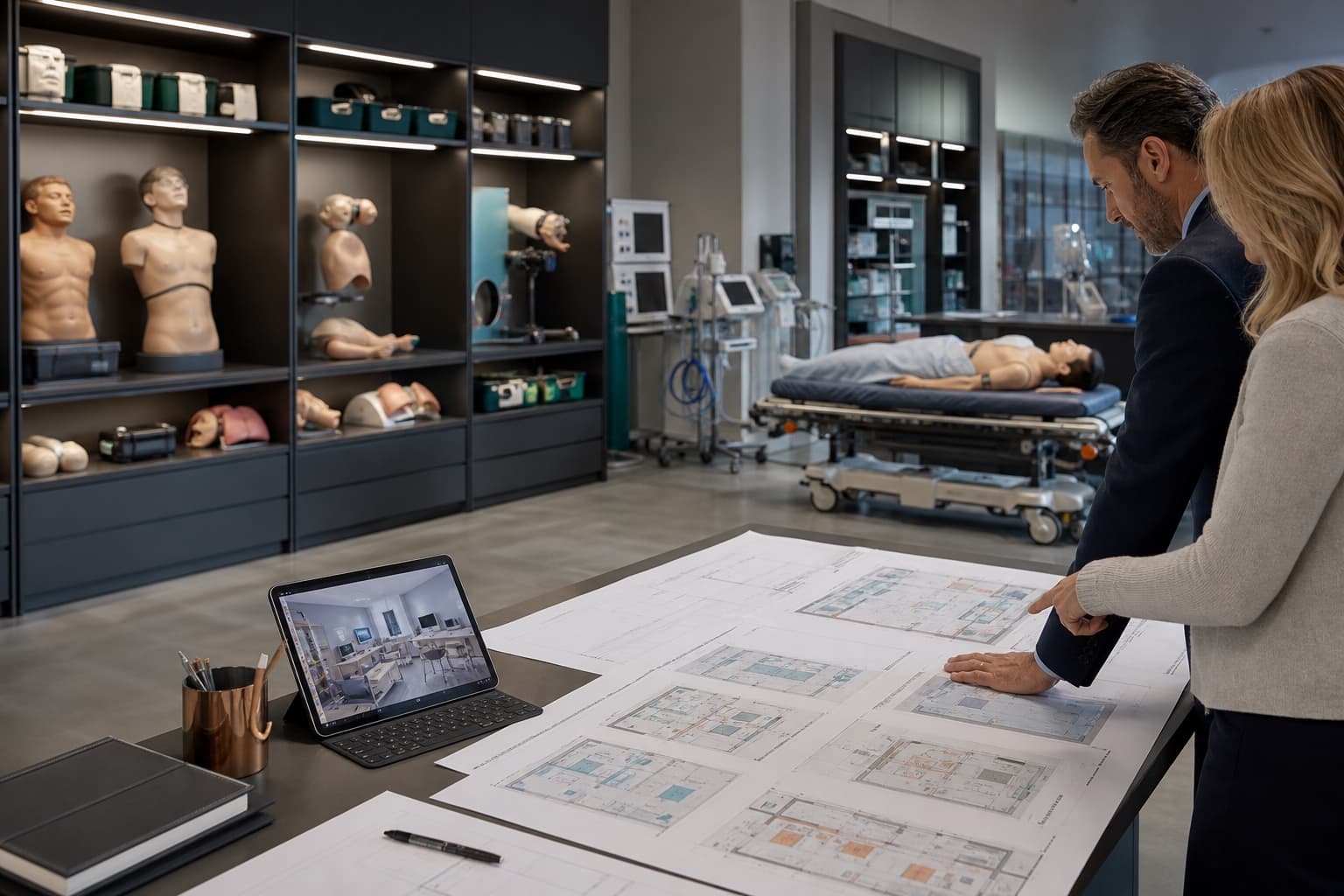
Map equipment to use cases
Start with the curriculum, expected scenarios, learner volumes, and faculty model before selecting brands or quantities.
The right list supports the teaching plan without overbuilding rooms or budgets.
Plan the hidden requirements
Consumables, charging, service contracts, storage, biomedical review, IT integration, and cleaning workflows can affect cost and usability as much as the purchase price.
Keep replacement in view
Equipment planning should include lifecycle thinking so the centre can refresh systems without disrupting the program or facility infrastructure.
Related BrainNet Services
FAQ
Should equipment lists be vendor-neutral?
Vendor-neutral planning helps teams define needs before comparing solutions and supports more transparent procurement decisions.
Can one room support every scenario?
Flexibility is useful, but some scenarios require specialized infrastructure, clearances, equipment, or acoustic conditions.