
VR and Immersive Learning in Healthcare Education: Planning Beyond the Headset
Immersive learning succeeds when space, support, curriculum, and operations are planned together.
BrainNet Consulting / 6 min read
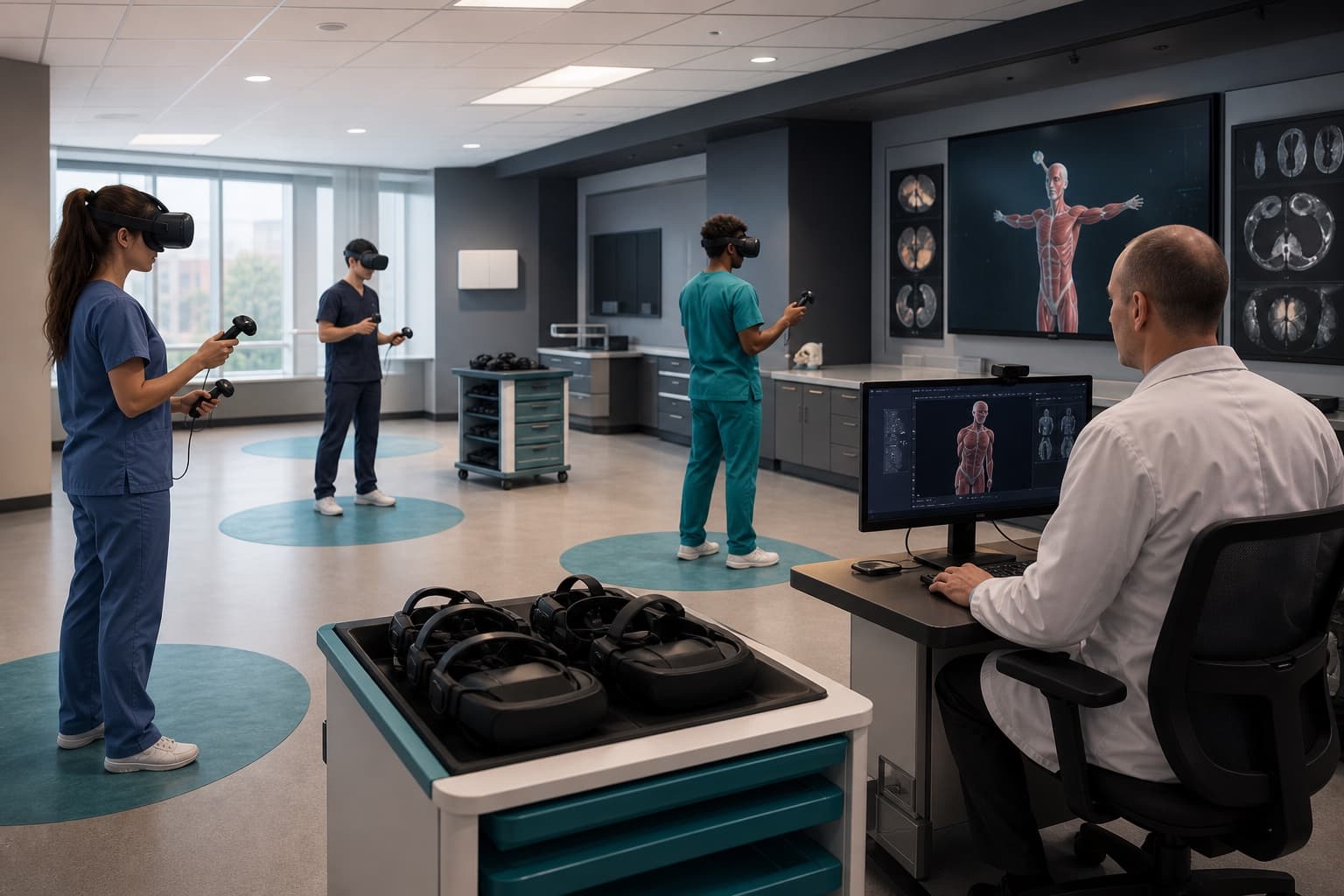
Define the learning purpose
VR, AR, MR, and digital anatomy tools should be selected after the team clarifies which learning problems they will solve.
The strongest plans connect immersive tools to curriculum, assessment, faculty readiness, and student support.
Design the room around safety
Clearances, supervision, power, charging, storage, cleaning, visibility, and data connectivity all shape safe and practical immersive rooms.
Plan support and adoption
Faculty workflows, technical support, scheduling, device management, content updates, and maintenance need ownership before launch.
Related BrainNet Services
FAQ
Should immersive rooms be separate from simulation labs?
It depends on use cases, space, safety, supervision, equipment storage, and whether the technology needs to support group teaching or individual practice.
What is often missed in VR planning?
Charging, cleaning, learner safety, content management, support staffing, and integration with the broader simulation curriculum.